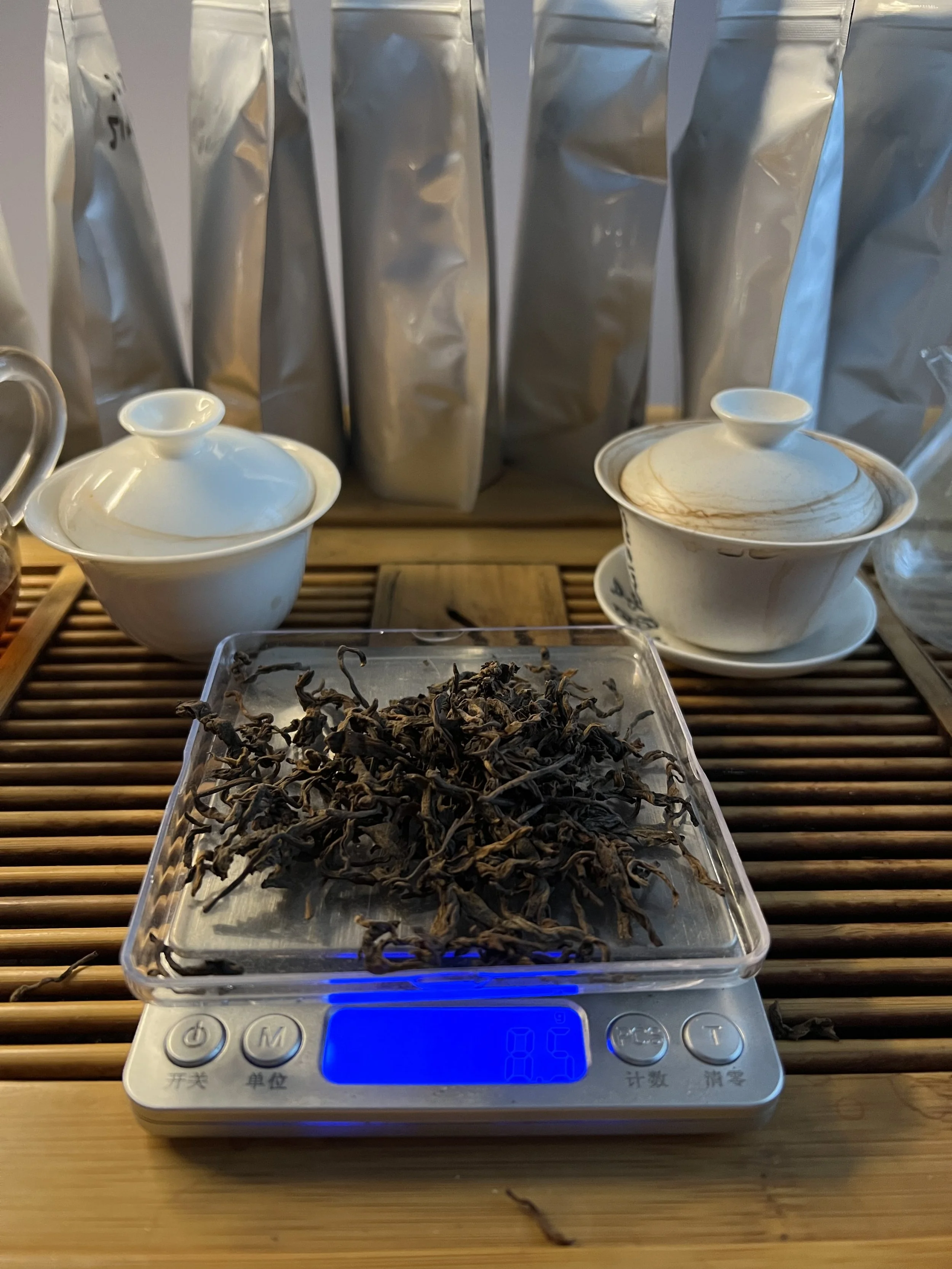
There is a lot of quiet work that happens before a single cake of pu’er ever gets pressed. Long before the steam rises in the pressing workshop or a wrapper is folded, there is a slow process of waiting, tasting, and just being present with the tea.
When we look for leaf for a new pressing here at Mandala Tea, we aren't just looking for something that tastes good on the first steep. We are looking for leaves grown the way nature intended—completely spray-free, up in the clean air far away from the pollution of big cities. We focus on older growth trees. Their deep roots draw from something strong and ancient in the mountain, and you can feel and taste that groundedness in the tea liquor. Finding the right match takes time and a lot of patience.
Cup after cup (and then some)
For every cake or mini-tuocha that actually makes it to our site, we taste twenty or more different samples. It is a beautiful process, but it’s also real work. Sitting for hours, side-by-side with different bowls and infusions, we pay close attention to how the tea behaves. We look at how the flavor evolves, how the throat feels after a few cups, how the energy settles in the body, and whether the leaf has the stamina to hold up over a long session.
Sometimes we go through a dozen samples that are perfectly fine, but just lack that pizzaz we are looking for. It’s a big investment of time and a quite the test on the palate, but we do it gladly because it’s the only way to be absolutely sure about what we are putting our name on.
The Work in the Shop
Once we finally settle on the right leaf, the hands-on craft begins. The process of turning loose leaf into a finished cake is exciting and traditional:
Steaming: The dry leaves are softened over steam, making them pliable and releasing a massive wave of fragrance into the room.
Pressing: The softened leaves are carefully shaped and pressed into form, locking in the character of that specific harvest.
Rack-Curing: The new cakes or mini-tuochas sit on curing racks, slowly drying and stabilizing at their own pace.
Wrapping & Bundling: Every single cake is wrapped by hand in its paper label decorated with art that we choose. Then, seven cakes are stacked and bundled together into traditional bamboo tongs.
There is something incredibly satisfying about seeing those finished, bamboo-wrapped packages. They represent clean air, old roots, and a whole lot of human effort.
Why the Effort Matters
It’s easy to look at a finished tea cake and just see a neat package on a shelf. But for us, the joy is in knowing the whole story behind the wrapper. We spend weeks tasting and sorting because we really do care about the relationship between the tree, the maker, ourselves and what is in each cup that you bring to your lips.
When you sit down with these new pressings, you’re sharing in that whole long line of effort—from the old trees in the mountains, through the dozens of sample cups on our tea table, to the final bamboo wrapping of each tong.